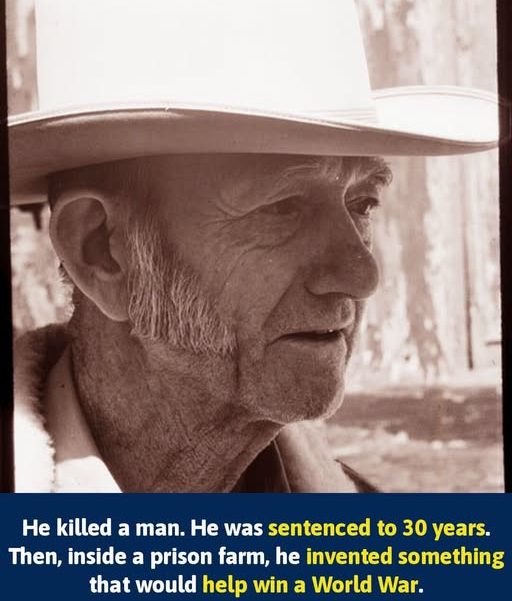
His name was David Marshall Williams, and by 1921 the state of North Carolina had decided his life was essentially over. The warden saw something different. He gave Williams a corner of the machine shop, and history quietly changed direction.
Williams was 21 years old when he was convicted of second-degree murder after a moonshining operation went wrong and a deputy sheriff was killed. The sentence was 30 years at the Caledonia State Prison Farm.
Inside, he had time. More time than most men could bear. He spent it thinking about guns.
The problem he kept turning over was pressure. Every firearm designer of the era grappled with it: how do you harness the explosive force of a cartridge to cycle the action reliably without blowing the whole mechanism apart? Williams had a new idea. A short-stroke gas piston that tapped only a fraction of the gas from the barrel, just enough to push the bolt back and chamber the next round.
He built his first prototypes from salvaged metal in the prison workshop. He had no formal training. What he had was obsessive focus and a machine shop that, by one account, a sympathetic superintendent gave him largely unsupervised access to.
He was paroled in 1929, after serving roughly 9 years.
Winchester Repeating Arms heard about him. He was brought in to work with their engineering team, and when the U.S. Army issued an urgent call in 1940 for a lightweight carbine that infantrymen and support troops could actually carry, Winchester submitted a design.
At the heart of it was Williams' short-stroke gas piston.
The M1 Carbine was adopted in 1941. By the end of World War II, more than 6 million had been manufactured. It became the most-produced American small arm of the entire war, standard issue for officers, paratroopers, and support personnel across every theater.
The carbine was not Williams' design alone. The Winchester team built the rifle around his system. That distinction matters and he always acknowledged it. But the operating principle, the engineering solution that made the weapon possible, came from a man working in a prison farm machine shop with thirty years ahead of him and nothing to do but think.
He was eventually pardoned by the governor of North Carolina.
Hollywood made a film about him in 1952, with Jimmy Stewart playing Williams.
He spent the rest of his life at his farm in Godwin, North Carolina, working on firearms until he could no longer hold them.
A convicted man. A prison workshop. A short-stroke piston.
Six million rifles. A war, somewhere on the other side of all of it.